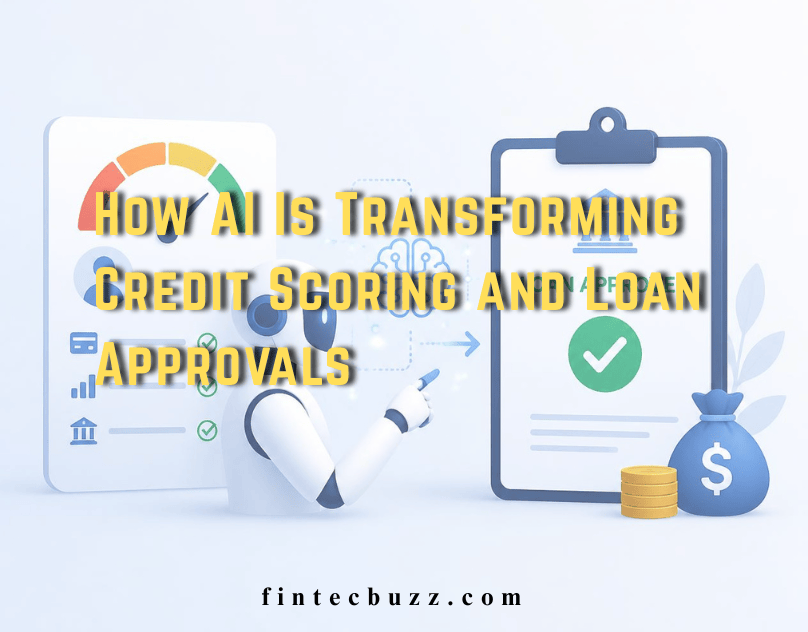
AI Credit Scoring: Transforming Modern Lending
AI credit scoring is reshaping how financial institutions evaluate borrowers, price risk, and process loan applications. By combining machine learning, predictive analytics, alternative data, and automation, lenders can assess creditworthiness more efficiently while improving the customer experience.
The value of AI goes beyond faster approvals. With strong governance, explainability, and continuous model monitoring, AI credit scoring can help banks and fintechs expand access to credit, reduce operational costs, and build more responsive lending strategies.
Smarter Credit Risk Assessment
Traditional credit scoring relies heavily on credit history, income, debt, and repayment behavior. AI can strengthen these assessments by incorporating relevant alternative data, including cash flow, account balances, income trends, and spending patterns.
Rather than simply increasing the amount of data used, lenders should prioritize data that is genuinely predictive of creditworthiness. A well-governed data hierarchy can improve model accuracy while supporting fairness, regulatory compliance, and customer trust.
Faster and More Efficient Loan Approvals
AI-powered loan approval systems can connect application processing, identity verification, credit checks, fraud detection, policy validation, pricing, and customer communication within a single workflow.
This automation can shorten decision times, reduce manual work, improve application completion, and allow lenders to handle higher volumes without significantly increasing staffing. However, speed should not be the only performance measure. Lenders should also monitor approval rates, manual intervention, operating costs, fraud losses, early delinquencies, and customer retention.
Five Steps for Responsible AI Lending
- Establish a baseline: Measure approval rates, decision times, losses, costs, manual intervention, and customer abandonment before implementation.
- Validate data and fairness: Review data quality, model performance, historical bias, and potential discriminatory outcomes.
- Test in a controlled environment: Compare AI-driven decisions with existing processes before full-scale deployment.
- Maintain ongoing monitoring: Continuously track model accuracy, risk outcomes, and fairness.
- Strengthen governance: Ensure decisions remain explainable, transparent, compliant, and subject to human oversight where necessary.
AI credit scoring can make lending faster, more inclusive, and more efficient—but its long-term success depends on using the technology responsibly, transparently, and with strong risk controls.
 FinTech Buzz
Leave a comment