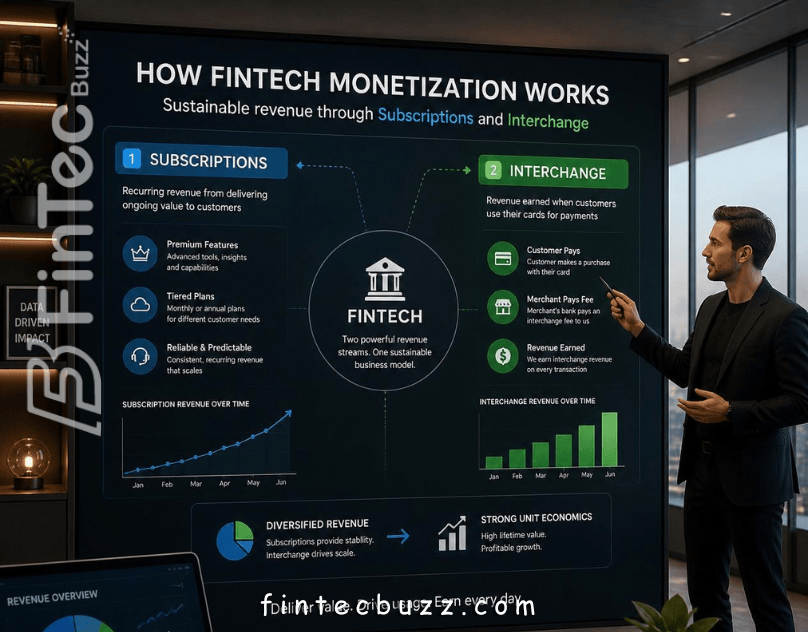
Fintech companies have changed how consumers and businesses manage money. From digital banking and payment apps to investment platforms and financial management tools, fintech products have made financial services faster and more convenient. But building a successful fintech product requires more than attracting users. Companies also need sustainable ways to generate revenue.
This is where fintech monetization becomes important. Modern fintech businesses use multiple revenue streams, including subscriptions, interchange fees, lending, partnerships, transaction fees, and premium services.
Subscription-Based Revenue
Subscriptions are one of the most straightforward fintech monetization models. Users pay a recurring monthly or annual fee to access premium features.
Digital banking platforms may offer paid accounts with benefits such as higher transaction limits, international payments, budgeting tools, cashback, or enhanced customer support. Investment platforms can charge subscriptions for advanced analytics, research, automated investing features, or personalized financial insights.
The subscription model provides predictable recurring revenue while encouraging fintech companies to continuously improve their products.
Interchange Fees
Interchange is another important source of fintech revenue, particularly for companies offering payment cards.
When a customer uses a debit or credit card to make a purchase, the merchant’s payment transaction generates fees that are distributed among different participants in the payment ecosystem. Depending on the business model and regulatory environment, fintech companies can receive a portion of this revenue.
The advantage of interchange-based monetization is that revenue can increase as customers use their cards more frequently. This makes customer engagement and transaction volume important drivers of growth.
Transaction and Payment Fees
Many fintech platforms charge fees when users complete specific financial transactions. These can include international transfers, currency conversion, instant withdrawals, merchant payments, or other financial services.
For businesses, payment processing can become a significant revenue opportunity. Fintech providers may charge merchants a fee for processing transactions, providing payment infrastructure, fraud protection, or related services.
However, competition can put pressure on transaction fees, encouraging fintech companies to combine payment revenue with other monetization models.
Lending and Interest Income
Lending represents another major fintech monetization opportunity. Fintech companies can provide personal loans, business financing, credit products, or other forms of digital credit.
Revenue may come from interest payments, origination fees, servicing fees, or other charges associated with lending products.
Technology allows fintech lenders to automate applications, underwriting, and servicing, potentially reducing operational costs. At the same time, responsible lending, credit risk management, regulatory compliance, and customer affordability remain essential.
 FinTech Buzz
Leave a comment